-->
young adult book reviews & more
Showing posts with label author post. Show all posts

Man Made Boy blog tour


Welcome to the Mad Made Boy blog tour! The son of Frankenstein’s Monster and his Bride, 16-year-old Boy has lived his whole life in a secret enclave of monsters hidden beneath a Broadway theater, until he runs away from home after he unwittingly unleashes a sentient computer virus on the world. Together with the granddaughter(s) of Dr. Jekyll and Mr. Hyde, Boy embarks on a journey across the country to L.A. But Boy can only hide from his demons for so long…

_________________________________________________________________

Mary, Mary, Quite Contrary

Frankenstein is one of the most enduring classics of gothic horror and considered by many to be the first science fiction novel. Most people know it was written by a woman named Mary Shelley. But not a lot of people realize she wrote it when she was only 19 years old. How could someone so young write something at once so dark and revolutionary? Or as Lord Byron puts it in the prologue to the 1935 film Bride of Frankenstein:

“Can you believe that bland and lovely brow conceived of Frankenstein, a Monster created from cadavers out of rifled graves? Isn’t it astonishing?”

That scene always cracks me up. Partly because the actor playing Byron has the most ridiculous “upper class” British accent I’ve ever heard. But also because all three of them, Mary Shelley, her husband Percy Shelley, and their friend, Lord Byron, are played as these fussy, uptight, English nobles.

The reality was quite different.

We will never really know the true story of Mary Shelley’s life. That’s because when she was older, Mary burned many of the journals and letters from her youth. Nobody really knows why, although it’s likely that she was trying to avoid yet another blackmail attempt. She didn’t burn everything, thankfully. We do have a few of her journals and letters. But to fill in the many gaps, we have to rely on the journals and letters of other people who knew her or knew of her, which amounts to little more than gossip. And there was a lot of gossip.

Mary’s father was an outspoken atheist philosopher and her mother was an outspoken feminist writer. Her mother died shortly after giving birth to her, leaving her father to raise Mary and her half-sister Fanny. To commemorate his wife’s death, he published her personal memoirs and was surprised when people reacted negatively to the sexual content the memoirs contained. It took him a few years, but he eventually remarried and Mary gained a step-sister named Claire.

When Mary was seventeen, a twenty-one year old activist/poet named Percy Shelley started to visit the house. At first he came because Mary’s father was a hero of his. But soon he started coming because of Mary. By all accounts, Percy was a real charmer and a brilliant poet, so it’s no surprise that Mary was interested in him, too. One problem, Percy was already married with two kids. When Mary’s father found out what was going on, he forbid them from seeing each other. That didn’t stop them, of course. They met secretly at night at her mother’s grave, read poetry to each other, and made out. Because yeah.

But that wasn’t enough for them. Soon after, they decided to run away to Paris, taking Mary’s stepsister, Claire, with them. The three wandered around Europe for a while. Mary got pregnant, but the baby girl was born premature and died after only a week or so. Percy was a big fan of free love and there are suggestions that he started hooking up with Claire somewhere in there. He certainly encouraged Mary to hook up with an old college buddy of his, although there is no evidence that she ever did. Then Mary’s half-sister, Fanny, committed suicide. And shortly after that, Percy’s wife committed suicide. Percy tried to take custody of his two children. He and Mary even got married so they would look more “respectable”. But his dead wife’s parents took him to court and won full custody from him. To escape it all, Mary, Percy, and Claire decided to run away to mainland Europe again.

In Switzerland they met the infamous Lord Byron, described by Lady Caroline Lamb as “mad, bad, and dangerous to know.” Possibly the most famous poet of his day, he was the closest thing the early 19th century had to a rock star. The Shelleys and Claire hung out at a lake house in Geneva with Byron and his “personal physician”, John Polidori, for the summer. A lot of sailing, reading, drinking, and drug use ensued. There’s no way of knowing who hooked up with whom that summer, but one thing is certain, by the end of it, Claire was pregnant with Byron’s child.

That summer spawned two other creations as well. Byron would sometimes entertain his guests by reading gothic horror stories to them while they all got high on laudanum. One night Byron proposed a contest to see who could write the best gothic horror story. Out of that contest came John Polidori’s The Vampyre, which was the first appearance of a vampire in English prose, and at the age of nineteen, Mary’s first novel, Frankenstein.

This post is already overly long, so I won’t go into everything that came after that fateful summer, but just to give you a taste (spoilers!), by the time she was twenty-five, Mary had buried three children and her husband. So I think we can safely say that Mary Shelley’s brow may have been bland, but her life certainly wasn’t.

_________________________________________________________________

Mad Made Boy Synopsis

Sixteen-year-old Boy’s father is Frankenstein’s monster and his mother is the Bride. A hacker and tech geek, Boy has lived his whole life in a secret enclave of monsters hidden beneath a Broadway theater, until he runs away from home. Now, the boy who’s never set foot outside embarks on a madcap road trip with the granddaughters of Dr. Jekyll and Mr. Hyde that takes him deep into the heart of America. Along the way, Boy falls in love, comes to terms with his unusual family, and learns what it really means to be a monster—and a man.

About Jon Skovron

Jon Skovron is the author of STRUTS & FRETS and MISFIT. Visit him at jonskovron.com.

Introducing Swoon Reads

Are you a fan of romance? Then you need to know about Swoon Reads, a new website, community, and publishing imprint dedicated to all things romantic and swoony!


So what exactly is Swoon Reads? In their own words...

Fall in love with falling in love.

Swoon Reads is a teen romance imprint publishing under Feiwel and Friends, an imprint of Macmillan.

Swoon Reads is dedicated to publishing books that capture the intensity of teen love. More than an imprint, Swoon Reads is a community – one whose members are included in every step of the publishing process. We open the doors for writers and readers to discover the best, most Swoon-worthy teen romance novels and make their voices heard. Together, we publish love stories you will want to read over and over again.

So if you love reading romance, writing it, or both, then Swoon Reads is the place for you!

Since I'm so excited about this new venture, I interviewed Jean Feiwel, the driving force behind it!

_________________________________________________________________

Swoon Reads is all about the romance. What elements, if any, do you think are necessary to make a great romance, and why?
My unoriginal definition is partly derived from the great romance writer, Jennifer Cruisie, and a RWA panel from some years ago. A great romance is a love story with an emotionally satisfying ending.

What do you think about novels where romance is not a central feature or present at all?
I am an avid reader of books of all kinds. But books without romance don't have a place on Swoon Reads.

And now for a fun question! Out of all the swoonworthy boys in the books you’ve worked on, which three do you swoon for the most?
Wolf in Marissa Meyer's Scarlet; The Darkling in Leigh Bardugo's Shadow and Bone; and Galen in Anna Bank's Of Poseidon.

_________________________________________________________________

So what are you waiting for? Head over to Swoon Reads and start swooning!

Visit Swoon Reads: http://www.swoonreads.com/
Read the Swoon Reads Blog: http://www.swoonreads.com/blog
Follow Swoon Reads on Twitter: https://www.twitter.com/swoonreads
Become a fan on Facebook! https://www.facebook.com/SwoonReads
Follow on Pinterest! http://www.pinterest.com/swoonreads/

Counting by 7s blog tour


Welcome to the Counting by 7s blog tour! Willow Chance is a 12-year-old genius who finds it comforting to count by 7s. She’s never really connected with anyone other than her parents, but when they both die in a car crash, she’s left completely alone. We asked author Holly Goldberg Sloan to share her 7s – from the seven favorite books to seven things her fridge can’t do without, follow Holly on Mondays, Wednesdays, and Fridays as she counts her own 7s.

__________________________________________________________________

7 times I was really afraid

1. When I was in junior high school we went on campus at the University of Oregon to a screening of NIGHT OF THE LIVING DEAD. Afterwards, we walked home in the dark, passing by the old pioneer cemetery. I'm surprised that I'm alive today.

2. I went to high school in Istanbul, Turkey and we were on a very crowded ferry when a fight broke out between two men. People were yelling and it was all in a language I couldn't understand. I did, however, understand that a fight between two people is not like what you see in the movies or on television. This was a lot messier and very frightening, not just for the fighters, but for all of us.

3. I was in a car accident when I was twenty-three years old and a large sedan drove straight into my car when I was sitting waiting for a stoplight to change. In the ambulance on the way to the hospital I told the medic that I was going to go to sleep. He slapped me across the face and said "Not on my watch." I found out when I got to the E.R. that they thought I was slipping into a coma. I'm not sure to this day if I was just sleepy, or if it was something worse about to happen.

4. When I was 42 years old, I was bit in the face by a baby alligator. It got me right in the nose and I have a photo of the whole mishap. Right after the bite, just before the alligator was pulled off my face, I was certain that I no longer had a nose. That was a scary thought.

5. My family once got lost in the woods. We were on a hike and no one thought to bring a compass. The trail that we were on disappeared and suddenly we were just walking. And walking. After several hours we came upon a bandana. I'd been wearing it earlier in the day. That's when we realized we'd gone in a complete circle. And that's when we knew that we were really lost.

6. When I was ten years old my family made an attempt to all learn to ski. By my third day I was up on the chairlift. But I had trouble getting on because I was small. Late in the day it was my turn to go up. For some reason there weren't any adults with me. I made it half on and half off, but I didn't want to ask for help. I gripped the center pole and tried to hold on. They didn't have any bars back then that came down in front of you. The chairlift rose up into the air and when I was about fifteen feet up off the ground I fell. I landed in a big snow pile. They stopped the chairlift and everyone ran to me. I remember more than anything else that whistles started blowing. I guess for the ski patrol. Needless to say, I have never been much of a skier.

7. I once found a scorpion in my shoe. I was just getting ready to put it on. Now that was scary.

__________________________________________________________________

Counting by 7s Synopsis:

In the tradition of Out of My Mind, Wonder, and Mockingbird, this is an intensely moving middle grade novel about being an outsider, coping with loss, and discovering the true meaning of family.

Willow Chance is a twelve-year-old genius, obsessed with nature and diagnosing medical conditions, who finds it comforting to count by 7s. It has never been easy for her to connect with anyone other than her adoptive parents, but that hasn't kept her from leading a quietly happy life . . . until now.

Suddenly Willow's world is tragically changed when her parents both die in a car crash, leaving her alone in a baffling world. The triumph of this book is that it is not a tragedy. This extraordinarily odd, but extraordinarily endearing, girl manages to push through her grief. Her journey to find a fascinatingly diverse and fully believable surrogate family is a joy and a revelation to read.

About Holly Goldberg Sloan:

Holly Goldberg Sloan was born in Ann Arbor, Michigan, and spent her childhood living in California, the Netherlands, Istanbul, Washington, DC, and Oregon. She has written and directed a number of successful family feature films. The mother of two sons, Holly lives with her husband in Santa Monica, California. I'll Be There was her debut novel (she earlier had written a middle reader book called Keeper).

Follow along the Counting by 7s blog tour to read all seven of Holly’s posts.

9/2: Live To Read
9/4: To Read, or Not To Read
9/6: I Am A Reader, Not A Writer
9/9: Making the Grade
9/11: There's A Book
9/13: Abby the Librarian
9/16: The Book Muncher

Confessions and Clues Week


There have been a string of murders on the Upper West Side in NYC. A killer is on the loose targeting private school girls, and while the police look for all the right answers in all the wrong places, Tandy Angel is determined to uncover who is really responsible. Tandy has shared these five clues that hint at who the killer may be.

But what is going on in Tandy’s mind as she tracks the footsteps of a killer? Here is one of Tandy’s true CONFESSIONS, an inside look at her thoughts and feelings.

To piece together the full story and get an inside look at this thrilling story, you’ll have to pick up a copy of Confessions: The Private School Murders, on-sale October 7th however books are sold.

And don't forget to check out today's Clue at My Shelf Confessions.
_________________________________________________________________

Tandy Angel, mastermind determined to track down a serial killer targeting private school girls on the Upper West Side, has more than just murder on the mind. Amongst the drama around her, she dreams of her long lost love James Rampling who has gone missing…will the two ever be reunited?


“That might be the worst fear of all—that I'll never get to experience true love again. The very thought makes my stomach clench, my heart pound, and my mind race.

-Confessions: The Private School Murders (page 12)

_________________________________________________________________

CONTEST CLOSED

(1) lucky winner will receive Confessions of a Murder Suspect and Confessions: The Private School Murders by James Patterson and Maxine Paetro, a journal, and a custom t-shirt
courtesy of Little, Brown


Other details:
  • US/Canadian mailing addresses only.
  • Contest ends 9/20/13, at 9 p.m. EST.
Remember, you must complete the form to be entered, and only one form submission per person will be counted. If you have any questions about this contest, see my contest policy, or contact me and ask away.

Interview with Katie Kacvinsky

The First Comes Love paperback has a new cover! How do you feel about its new packaging and design?
I love the new cover. It reminds me of Stargirl, and that’s one of my favorite covers of all time. I like it when covers avoid using characters, so that readers can imagine them for themselves. I also love the cactus heart; it’s very fitting for the male character (Gray).

What were you trying to accomplish when you started writing First Comes Love? What do you feel you’ve accomplished with the finished product?
I was trying to vent. One of my best friends had recently lost her brother, and watching her go through the grieving process was so heavy, and I felt so helpless to comfort her, that I started writing First Comes Love as a way to expel all of these emotions cramming my head. I also wanted to write a realistic relationship story. Falling in love is easy, but staying in love and making it last is work and commitment.

Which of your characters in this book can you relate to most, and why?
Both. I am 50% Gray and 50% Dylan. Even my editor told me that the reason this story works is because Gray and Dylan are me. I suppose this is true. I have two extreme sides to my personality, one upbeat and adventurous and the other closed off and cynical.

Your two series, Awaken and First Comes Love, have very different settings, but both focus on relationships. What is it that draws you to this topic?
I love relationship stories. I think it’s so strange and mysterious to see who we are attracted to and who we connect with. The people that we invest our time in say so much about who we are.

What is the most interesting thing you learned while writing First Comes Love? (This can be about yourself, about writing, or anything at all).
I learned that I don’t believe in love at first sight. I learned that relationships build over time and experiences. I also learned that it’s more important to love people on their worst days than on their best.

What is the most rewarding part about being a young adult author?
There are so many “firsts” when you are young. First love. First heartbreak. First road trip. First job. In my experience, “firsts” are very overwhelming. I think that’s why I love writing YA books. There is endless drama.

If there was one thing you could change about First Comes Love, what would it be?
The design on the hardcover. I know it’s “steamy” but I personally don’t like steamy covers.

What are you working on next?
Well, I wrote a sequel to First Comes Love, titled Second Chance. The Gray and Dylan saga continues…and there will be a third and final book to wrap up their story. At the moment I’m concentrating on finishing the last book in the Awaken series.

Home Sweet Rome Blog Tour


A very warm welcome to Marissa Moss! Her novel Home Sweet Rome, the second installment in her Mira's Diary series, came out earlier this month!

_________________________________________________________________

How was your experience of writing Home Sweet Rome different than writing its prequel, Lost in Paris?
The experience was as different as being in Paris compared to Rome. I know both cities well, having lived in each for a year, but they have very distinctive personalities and I hope those characteristics found their way into the books.

The Mira's Diary books are formatted as a sort of sketchbook. Could you tell us a little bit about the process of creating an illustrated novel?
For me, it's easier than straight writing because the illustrations can get across a lot of information, freeing me from the burden of too much heavy-handed descriptions. Whenever art will get the point across as well as words can, I prefer to use a picture. Plus I love to draw, so that part of the book is pure fun.

What made you decide to write about time travel?
I love history and I thought time travel could be a way of making particular times and places come alive for readers. I wanted to tell historical stories in a way that would seem relevant to people today. At least, that's what I hope I'm doing with these books!

What sort of research did you have to do for Home Sweet Rome?
A huge amount! I read a lot of books on subjects ranging to 17th Century daily life in Rome to the philosophy of Giordano Bruno. Plus I watched an Italian documentary on Bruno (complete with re-enactment of his death) and I explored the archive of secret documents housed in the Vatican at a special exhibit in Rome. Some of my research was simply walking the streets, sketching things that would make interesting Touchstones.

What is the most interesting thing you learned while writing Home Sweet Rome? (This can be about yourself, about writing, or anything at all).
I'd have to say the more I read about Giordano Bruno, the more fascinated by him I became. He was such an unusual thinker, really a lot like a modern-day physicist, except in the 17th century that kind of work was considered philosophy. It was striking that at that time, there weren't the same kind of separations as we have now between science and religion, art and philosophy. They all had to do with a search for the truth, for better understanding the world around us.

What is the most rewarding part about being a middle grade author?
The biggest compliment I get is when kids write to me that I've inspired them to write themselves—or encouraged them to read when before they thought books were boring. That kind of response is deeply rewarding!

If there was one thing you could change about Home Sweet Rome, what would it be?
I wanted to have more sketches of Rome. The city is so rich visually, I ended up with far more drawings than fit into the book. I wished they could have all gone in!

What are you working on next?
Mira goes to London next, during WWI, where she meets some interesting authors as well as suffragettes. It's another period full of juicy stories that I want to somehow fit in to the book.

_________________________________________________________________

CONTEST CLOSED

(1) lucky winner will receive Mira's Diary: Home Sweet Rome by Marissa Moss
courtesy of Sourcebooks


Other details:
  • US/Canadian mailing addresses only.
  • Contest ends 4/26/13, at 9 p.m. EST.
Remember, you must complete the form to be entered, and only one form submission per person will be counted. If you have any questions about this contest, see my contest policy, or contact me and ask away.

The Key & The Flame blog tour


A warm welcome to the lovely Claire M. Caterer, whose middle grade novel The Key & The Flame released just last week! 

_________________________________________________________________

Four Things I’ve Learned About Publishing

First of all, let me say thank you to Rachael Stein for hosting me today on The Book Muncher! She asked me to talk a bit about the publication experience today, which turned out to have a few surprises. Here are the four truths about the biz that I’ve learned on my publication journey.

1. Publishing is really slow.

Years ago, I dreamed that someday I’d get the Call from an editor, we’d work on my brilliant manuscript, and within six months, my book would be on the bookstore shelves.

Not so.

Between finished manuscript and bound book, it was 3 years and 4 months—10 months to find an agent, another 10 months of revisions with him, 2 months to get the Call, and 18 months from there to bound book. And I’ve heard it taking longer than that—much.

2. They get excited about your work.

This should have been obvious, but I was unprepared for how pumped my editor was about my book, talking about my characters as if they were real people. When I had lunch with her, she uttered a very un-kid-friendly expletive about how gorgeous the cover was. Maybe publishers of adult lit are jaded; I don’t know. But kidlit pub folks really love books.

3. Promotion costs money and time.

I knew I would be responsible for a lot of the promotion for my book. But I didn’t realize how much time and money that would entail. A professionally designed website, printed bookmarks, travel to conferences or book festivals, swag and other items for giveaways—these are costly. But the time it takes to organize and purchase it all is enormous. I don’t do nearly as much blogging, Tweeting, and Facebooking as some authors I know, and yet I have spent nearly as much time on promotion as I have on writing.

4. A network is essential.

Meeting people is hard for me. That’s why I stay in my room and talk to imaginary people on paper all day. But in a fit of writerly enthusiasm, I joined the Lucky 13s, a network of kidlit/YA authors debuting in 2013. The writer’s life is a lonely one, and when you’re pubbing for the first time, the journey is bewildering. No matter how supportive your mom or spouse or dog can be, they won’t really understand what you’re going through the way another writer can. From advice on writing, revisions, web design, book trailers, and changing agents to just offering a shoulder to cry on when it’s all going to pot, the Luckies cover it all. This road would have been so much harder to travel without them.

_________________________________________________________________

CONTEST CLOSED

And now for a contest! Claire is offering a giveaway of a Fab Bag o' Swag with signed bookplates, stickers, tasseled bookmarks, and a charm bracelet to (1) lucky winner!


Other details:
  • US mailing addresses only.
  • Contest ends 4/15/13, at 9 p.m. EST.
Remember, you must complete the form to be entered, and only one form submission per person will be counted. If you have any questions about this contest, see my contest policy, or contact me and ask away.

_________________________________________________________________

The blog tour continues tomorrow at GreenBeanTeenQueen, where Claire will talk about how one city’s library was her anchor during the early writing years. Get the full blog tour schedule right here.

Interview with Gillian Philip & a contest

The first book in Gillian Philip's Firebrand series is available in the US for the first time! To celebrate, I've got a fantastic interview and a giveaway, but first, check out this great book trailer below!


_________________________________________________________________

Now that three books in the Firebrand series have come out in the UK, how does it feel to have the first book available for the first time in the United States?
It feels great! Especially with the new cover. I love my UK covers but the US ones are stunning too. It also feels good to have a second bite at the later books - there were scenes I wish I’d put in Bloodstone, and now I can, because Tor are kind enough to let me do a few additions and adjustments. That’s not a chance a writer often gets.

What inspired you to write Firebrand?
Seth! He was originally a minor villain in Bloodstone, and I had to rewrite the whole thing when I realised the series was first and foremost his story. Firebrand was a backstory that turned into an entire novel. I’m also really inspired by landscape - I like to walk miles, imagining scenes and characters. Bloodstone came about because of a small loch in the Highlands that I love - I imagined a couple of characters falling into it and vanishing.

Firebrand is first and foremost a fantasy, but there seems to be a strong historical element as well. What kind of research did you have to do for either or both of these aspects?
I’m the world’s laziest researcher, but once I started to read about sixteenth century Scotland I was hooked. It was a pretty terrible time to be alive, with religious wars and the Reformation and witch-hunts, but if that’s bad for your characters, it’s great for the story. I went back to loads of original sources, like King James VI & 1’s Daemonologie, the Malleus Maleficarum, and contemporary accounts of witch trials. I even found a price list for torturing and executing witches...

As for the myths and legends, I’d been familiar with some of them since I was young, but I read up about them in much more depth. I got the series title from an old Highland legend that the faeries are the rebel angels - or the ones who fell on land. The ones who fell in the sea became selkies, the seal people; the ones who got caught in the sky became the Northern Lights.

In Firebrand, the mortal world and the Sithe realm are distinct yet connected. Can you tell us a little bit about how you developed these two settings?
The idea of a portal between dimensions is of course a pretty common one in fantasy fiction, but for a good reason - it’s such a great device :-) And there is a concept in Celtic myth of a veil between the faery world and ours. I wondered what would happen if that barrier was rotting away, and in danger of dying, and who that would threaten most - us, or the creatures on the other side. My Sithe world is identical in terms of landscape to the real Scotland, but a lot wilder - and my Sithe, because they move between the worlds, are kind of fond of our technology, and have no problem stealing it. I had fun giving them things like iPods and fridges in the later books.

What is the most interesting thing you learned while writing Firebrand? (This can be about yourself, about writing, or anything at all).
I think the most important thing I learned is to stay true to the story. Even in manuscript, Firebrand got a lot of wildly varying responses. Some readers loved it and some hated it. And the same applied to Seth - I was taken aback by how much some people disliked his character. I wasn’t averse to making some changes, and I did - he thinks a little more deeply in the final version, and he also has a few lighter moments - but I knew he had to be himself, right down to his bones. There are a lot of bad aspects to his character (well, he did start life as a villain), but taking away his stroppiness, his arrogance, his propensity for violence, even his prejudices - that would have made him another person. I talked about this to a lot of other writers who have the same sort of dilemma, and we all know there’s a balance, and that only the writer can try to judge where that is. You can’t crowd-source your character’s attitudes and morality... but it is agonising sometimes!

Gillian PhilipWhat is the most rewarding part about being an author?
The knowledge that people are reading your story, and enjoying it - sometimes even that they’re not enjoying it, but are reacting strongly to your characters. When you’re writing a 100,000 word novel, you spend a lot of time with the people in your head, and there’s nothing quite like introducing them to other people, in the real world.

If there was one thing you could change about Firebrand, what would it be?
Oh, all sorts of things... see what I said about Bloodstone in my first answer? I think all books are like that. I can’t read a passage out loud to an audience without my internal editor kicking in.

I’ve often wondered if I’d change the ending... but I wouldn’t.

What are you working on next?
I’m looking forward to writing the final draft of the fourth Rebel Angels book, provisionally titled Icefall. I have a rough idea what happens, but it needs a lot of work. I’m also writing a middle grade series, Rookery Island, under a pseudonym, for a fantastic company called Working Partners. I also write for them and Harper Collins as Erin Hunter - it’s a series called Survivors, which I love working on, about a group of dogs left alone in a post-apocalyptic world. I’m touring the US in May to promote Book 2, A Hidden Enemy, and I am so looking forward to that. Finally, there’s a contemporary YA thriller cooking away in my head, called (for now) Spitting Distance - I’m really keen to get back to that one too. The characters are calling... Oh, and at some point I have to clean my house...!

_________________________________________________________________

CONTEST CLOSED

(1) lucky winner will receive Firebrand by Gillian Philip
courtesy of Tor


Other details:
  • US/Canadian mailing addresses only.
  • Contest ends 3/23/13, at 9 p.m. EST.
Remember, you must complete the form to be entered, and only one form submission per person will be counted. If you have any questions about this contest, see my contest policy, or contact me and ask away.

Cinders & Sapphires blog tour


Have you been imagining what it would be like to be in the midst of Leila Rasheed's new book, Cinders & Sapphires? If so, then be sure to pay attention to this useful guide to 1900s British etiquette—you wouldn't want to be caught doing the wrong thing now, would you?

_________________________________________________________________

How to host a private ball

Set aside seven rooms in your home. You will need: two cloak-rooms, drawing-room for the reception, a tea and refreshment room, ball-room, card and supper rooms. While you might not be able to change the sizes of your rooms, do keep in mind that a square room is optimal, especially for the ball-room, as a rectangular room can be absolutely fatal for dancing. So as to not fatigue your guests, a wood floor is a must for dancing, and a highly polished one at that.

Nothing will tank your ball faster than poor music. For a ball of respectable size, one or two instruments as well as the piano are necessary, such as violin, cornet, or harp, varied by the addition of bells and triangles. If your musicians are amateurs it will be readily apparent to your guests, so do not make this grave error.

All rooms should be well-lit. Wax candles are a hazard at balls because all of the dancing and fanning may cause wax to drip on your guests’ finery. Make sure to use French lamps, placed on brackets at short distances, and high enough to be out of the way. They shed the softest and most pleasing light, but remind your servants that they will need to be refilled at least once during the course of the evening.

It is customary for balls to begin at 10 pm. Have the staff unroll a carpet reaching from the hall door to the carriage-way. Guests should be seen into the cloakrooms, where a maid must be stationed at the ladies’ and a footman at the men’s. The maid should see to it that each lady’s hair and attire receives the attention they require, as wardrobe malfunctions from the carriage ride over may well occur.

A programme, also known as a dance card, is passé and unnecessary. However, a lady must keep track of the dances she has promised. And a man must always claim his dance with a lady or risk causing terrible offence.

Supper should be served at 1 am. The lady’s most-recent partner will escort her to supper.

Accepting so many dances with the same partner as to attract attention is a faux pas. After the dance, the gentleman should offer his partner a refreshment, and escort her to the tea room. He should then bring her to her chaperon. Too much walking about together may cause unwanted and unwelcome scrutiny.

The ball should end around 3 am. It is customary for your guests to bid you good night quietly so as not to impact the rest of the guests’ good time.

_________________________________________________________________

And now we all know how to throw a party in 1900s Britain—what a relief! 

What We Saw at Night blog tour

What We Saw At Night

A very warm welcome to Jacquelyn Mitchard, whose new book What We Saw at Night comes out tomorrow from the recently launched Soho Teen! She's here to talk a little bit about her research on Parkour.

_________________________________________________________________


To my horror, I found out I was once removed from an amateur Parkour addict. My son Dan, now a student chef, suggested that Juliet lead Rob and Allie into this Extreme sport instead of cliff skiing or marathon kayaking because it's so unexpected outside the urban setting and so very, very difficult. I started watching YouTube videos of Parkour "tracers," and at first, I was just seeing the hot dogs, showing off their washboards and their super pecs. But then I got hold of an old video about the founder David Belle, Junior, a Frenchman who started the sport after his father created the basic idea as a military tactic—so that in getting out of a bad situation, you would never have to stop, but would be able to vault or boulder over any obstacle. The whole thing is about safety. It's about being part of the earth instead of being a foreign object on the earth. When you trace, nothing but your own fear can stop you. People who are part of real Parkour "tribes" are not hot dogs. They are very disciplined and strong. There is a big part of the sport (or the discipline) that isn't doing the run or climb at all but lifting weights, and practicing the same hanging swing or leap over and over and over and over until you could do it…well, literally in the dark. And that's how my story was born.

_________________________________________________________________

Don't forget to visit Jacquelyn online at her website: http://www.jacquelynmitchard.com/
And find out more info about Soho Teen: http://www.sohopress.com/soho-teen/

Interview with Daphne Benedis-Grab

The premise for your new novel, The Girl in the Wall, is pretty different from that of your first novel, Alive and Well in Prague, New York—but both are still contemporary. How was writing The Girl in the Wall similar to and different from writing your first book?
Yes, they are really different! Alive and Well was based on my experience of having a terminally ill parent, like Matisse does in the book. My actual experience was different but I drew on the feelings of pain, fear, anger and loss that I had lived through. It was a very personal book to write.

The Girl, on the other hand, was not taking from anything in my own life—I have never been in any kind of life threatening or hostage situation (and I hope I never am! I would be one of the wimpy ones cowering off in a corner.). It was more of an adventure to write, the fun of imagining this crazy situation and what might happen in it. But of course I did still drew on authentic emotion, pulling from past experiences and emotions to inform how I thought Sera and Ariel might be feeling at different times, so in that way they were similar.

Where did your ideas for this novel come from?
I have one of those minds that never shuts off and when there isn’t anything pressing right in front of me that needs my attention, my mind wanders into what-ifs and mini stories. I come up with a lot of them but few are actually good book ideas. With The Girl I just started thinking about what might happen if a party got taken hostage and all these dressed up teens had to find a way to outsmart their captors. And also find time for some romance- that always figures into my what-ifs and mini stories.

What sort of research did you have to do for this novel?
Really random stuff, like what the air smells like after a bullet is fired and also the process for transferring over a company and liquidating its funds—don’t worry, there isn’t much of that in the story! I just needed to know it to be sure what I was writing was based in reality.

What was the most difficult scene for you to write, and why?
I don’t want to say too much about it because it happens towards the end but the death of a character I loved was a very hard scene to write. I didn’t want anyone to get hurt but when the set up is a hostage situation with guns and billions of dollars at stake, you kind of have to go there or it’s not true to the premise and promise of the story.

What is the most interesting thing you learned while writing The Girl in the Wall? (This can be about yourself, about writing, or anything at all).
Good question! I think my big takeaway was how much I like writing thrillers. I’ve always loved reading them—when I was young I was addicted to Lois Duncan’s books and I still reread them periodically (if pressed I would say my favorite is They Never Came Home). But I didn’t think I could actually write one and in fact, when I first started it and mentioned it to my agent, I was shocked when she called it a thriller. I hadn’t been thinking of it in those terms—but once she said it I saw she was right and I was pretty pleased to be working on a genre I like so much!

What is the most rewarding part about being a young adult author?
There are so many things I love about it! Hearing from readers is pretty close to the top of the list. Revisiting and reimagining my own teen emotions and experiences is up there as well—I had some good times and very good friends in high school, but there is plenty I would redo if I could!

If there was one thing you could change about The Girl in the Wall, what would it be?
Honestly I could open the book to any page and find a phrase or a word I’d like to change—the writing process is never done for me, it’s just that I hit the deadline and the book has to go. I work with an amazing editor who made the story much tighter and stronger, but even so there are always little things I wish I could tweak just because it never seems perfect.

What are you working on next?
Another thriller! I’m just at the beginning which is my favorite part because it feels filled with possibility.

Interview with Sarah Fine & a contest

What has your experience as a debut author been like so far? What has been the best part of the publishing process for you? the worst?
My experience as a debut author has been … brief. Most authors have to wait well over a year from the time their books sell to the time of publication, but my deal was announced in February of this year! I honestly have to say that my focus has remained where it was before—on writing the next thing. In fact, that’s how I cope with the worst part of the publishing process: the waiting. It’s also how I experience the best part: the feeling of actually becoming a better writer as I get feedback from my agent and editors. That’s both humbling and exciting. As is, of course, hearing from people who’ve read advance copies of Sanctum. I’m so intrigued by their reactions, whether positive or critical. It’s an honor that anyone wants to read something I’ve written.

You’re both a child psychologist and a young adult author. How does knowing child psychology affect how you write, and vice versa?
It took me eight years after college to become a psychologist, and at some point, I lost sight of what part of me was “psychologist” vs. just “the way Sarah thinks about things.” I’ve always been interested in how people construct their own “real,” how no one really has cornered the market on objective reality. We all just do the best we can, but everything we believe to be “truth” is filtered through our own biases and hopes and desires. Yet somehow, we reach each other, and we change each other. I don’t know. I’m interested in what goes on inside of people and between people, and that’s what I write about, too, even in stories where there’s intense action.

Sanctum (Guards of the Shadowlands, #1)Where did your ideas for Sanctum come from?
I was interested in the idea that death doesn’t constitute an end to one’s emotional journey—I wanted to explore the idea that even the dead have to deal with their issues. But … in the Shadowlands, the afterlife in Sanctum, the “issues” are much more tangible. They—disappointments, wants, fantasies—are manifested in a very palpable, concrete way in that afterlife. They have smells and textures, and they can fit in a pocket or rise a hundred stories into the sky. It was tremendously fun to use that idea as a foundation and take it as far as I could. The dark city in Sanctum is the product of that.

What is the most interesting thing you learned while writing Sanctum? (This can be about yourself, about writing, or anything at all).
I learned that some books just have to be written a certain way. Believe it or not, I originally wrote this entire book in third person, all 400-or-so pages of it. And then … I realized it was too distant from Lela, who’s the heart of this story. The reader needed to be inside her head, and the voice of the story needed to be hers. So I went back and rewrote the WHOLE thing in first person. I’m so glad I did. It changed everything.

What is the most rewarding part about being a young adult author?
Hands down, when teens read the book and find it genuine and real—and entertaining.

If there was one thing you could change about Sanctum, what would it be?
Honestly? I’m a better writer now that I was when I wrote Sanctum. I think that’s true for most debut authors. It’s a truly developmental process, and there’s always room for improvement.

What are you working on next?
I am editing several projects that will be coming out over the next few years, including Book Two in this series. The next project I’ll be working on is the third installment. It’s going to be INTENSE.

_________________________________________________________________

And now for a contest!

CONTEST CLOSED

(1) lucky winner will receive Sanctum by Sarah Fine
courtesy of AuthorsOnTheWeb


Other details:
  • US/Canadian mailing addresses only.
  • Contest ends 11/01/12, at 9 p.m. EST.
Remember, you must complete the form to be entered, and only one form submission per person will be counted. If you have any questions about this contest, see my contest policy, or contact me and ask away.

The Shadow Society blog tour

check out the full tour schedule at the MacKids blog

A very warm welcome to the wonderful Marie Rutkoski, whose debut YA novel The Shadow Society I simply adored.

_________________________________________________________________

I’ve always been fascinated by the idea of alternate worlds and alternate histories. What inspired you to write about this in The Shadow Society?
You and I are kindred spirits! You know, maybe I watched too much Quantum Leap as a kid, but it seems both wonderful and almost frightening that so many decisions, small and large, shape our world. Things could so easily look different.

As for why, specifically, I wrote about an alternate world/history in The Shadow Society, I knew that I wanted to set the story in Chicago and its suburbs. One of the defining features of the city is how it was ravaged by the Great Fire. "What if?" is a question that sets almost every story in motion, and in this case I began to wonder, "What if the fire never happened?" which gave rise to another question: "What if the reason it happened is not the one we learned?"

What sort of research did you have to do for this novel?
The Shadow SocietyNot a lot of active research, beyond reading up on the fire, asking a friend how to paint with oils, and talking with a couple of other friends about how the Department of Children and Family Services functions. For me, it tends to be the case that my novels spring out of "research" I've already done-- and by "research" I can mean that literally, but also just generally as "things I've learned." For example, when I was in grad school a classmate of mine gave a conference paper on how the legend of Mrs. O'Leary is not only fake, but also based on bigotry toward the Irish in Chicago. Basically, the story Chicagoland kids learn is that the Great Fire was started because Mrs. O'Leary's cow kicked over a lantern she'd lit in a shed. My friend explained that this was an urban legend, one that sought to pin blame for a great disaster on an Irish woman when Irish immigrants were many, poor, and disliked. The story is false-- and worse, xenophobic.

I heard this paper perhaps ten years ago, and when I heard it I had no plans to write something about it. But it interested me, and stayed with me, and eventually influenced The Shadow Society—which, among other things, is about the damage different ethnic groups can do to each other.

Your previous novels, The Kronos Chronicles trilogy, are middle grade but The Shadow Society is young adult. How, if at all, was writing your first YA novel different than writing your first three books?
I think the main thing is that different themes are emphasized for the two different audiences. Middle grade books—at least the way I write them—feature adventure, friendship, and a sort of old-fashioned storytelling that hearkens back to fairy tales. YA—at least the way I write it—features romance and figuring out one's identity in the face of powerful institutions and the legacy adults leave you. It's all very fun to write, and of course all of these themes end up in both genres. It's just a question of emphasis.

As someone who both writes and teaches creative writing, how does one occupation affect the other and vice versa?
The two tasks—juggling them—give me a heightened sense of self-consciousness. I'm not always sure this is a good thing. But I try to be more aware of how I'm doing what I'm doing while I write, so that I can teach it. And in the process of teaching, I set out very deliberately to consider how elements of fiction function. Sometimes this consideration makes me more careful when I write.

What is the most interesting thing you learned while writing The Shadow Society? (This can be about yourself, about writing, or anything at all).
MarieThis is a good question! I learned that while I loved writing in the first person for the book, that is probably because the story hits close to home—not because I'm a paranormal creature or from another world, but because the book is in some ways inspired by the community and place in which I was raised.

Also, I learned that I probably write about other worlds because I tend to inhabit at least two. I'm a professor and I write. I usually live in New York City but am living in Paris for the year. I'm married to a Frenchman and have bilingual kids.

What is the most rewarding part about being a young adult author?
I'm not sure I can answer this question yet. It's still very new for me. Plus, writing a book is its own reward, and that doesn't change even if the genre does.

If there was one thing you could change about The Shadow Society, what would it be?
Rachael, this is a good question...but also one I shouldn't try to answer, for the sake of my mental health! Alas, there is no Quantum Leap-like way to go back in time to change things, and there is no alternate world for me to visit. One of the hardest—and most important—aspects of being a writer is letting go. The Shadow Society is done. It is not perfect, but I love it like I would a friend, flaws and all.

What are you working on next?
My next novel is The Winner's Curse, about a girl who is an aristocratic member of a warmongering empire. There are balls, duels, deadly gossip....and a rising rebellion that threatens to change everything. (It is not a dystopia.) It will be published in Fall 2013 or early in 2014.

_________________________________________________________________

Intrigued? Well, then here's your chance to win Marie's new book!

CONTEST CLOSED

(1) lucky winner will receive The Shadow Society by Marie Rutkoski
courtesy of Macmillan

To enter this contest, please fill out this form:
https://docs.google.com/spreadsheet/viewform?formkey=dDNHeS1EOEgtU3pEMHZndTROSjdOY3c6MQ

Other details:
  • US/Canadian mailing addresses only.
  • Contest ends 10/30/12, at 9 p.m. EST.
Remember, you must complete the form to be entered, and only one form submission per person will be counted. If you have any questions about this contest, see my contest policy, or contact me and ask away.

Interview with Sarah Beth Durst

All of your previous books, both young adult and middle grade, contain fantasy elements. Why do you choose to write in this genre?
I am a firm believer that "write what you know" should really be "write what you love." And I love fantasy! I am a sucker for any story about a kick-butt girl and her talking horse/dragon/wolf/sword/potato sidekick. I love the feeling of empowerment and hope that I get from reading a fantasy novel. I love that fantasy has the power to take me on an impossible journey and to restore my sense of wonder.

How was writing Vessel similar or different to the process of writing any of your previous young adult books?
Vessel is my sixth young adult novel, and I have honed my process down to the following steps:

1. Carefully craft an outline.
2. Print out my outline and proudly display it next to my laptop.
3. Ignore the outline and write the first draft as quickly as possible with minimal regard to characters, plot, setting, or verbs.
4. Buy some chocolate.
5. Create a new outline that fixes all the stuff that was wrong with the first one, loosely inspired by whatever poured out of my fingers in step three.
6. Open a brand new file and write the second draft from scratch using the new outline.
7. Eat the chocolate.
8. Repeat as needed until done.

What sort of research did you have to do while writing Vessel?
I love to mix reality and fantasy, so I did a lot of research on the Sahara Desert, the Gobi Desert, and several deserts in the southwestern part of the United States. I then wove them together, layered in my own mythology, and added wolves made of sand, sky serpents of unbreakable glass, monstrous worms, and gods and goddesses that walk in human bodies.

What is the most interesting thing you learned while writing Vessel? (This can be about yourself, about writing, or anything at all).
I learned that snakes can remain venomous for twenty-four hours after death. Also, I learned that there is something immensely freeing about writing about a world that doesn't exist. There's a wonderful feeling of utter immersion when you take yourself into a purely imaginary place. It made for a fantastic writing experience.

What is the most rewarding part about being a young adult author?
The most rewarding part of being an author is being able to write the next book!

If there was one thing you could change about Vessel, what would it be?
Honestly, I did the best I could with this book and poured everything I have. So I'm happy with it as it is. I hope everyone else is too!

You’ve written both young adult and middle grade before, but you have a forthcoming adult trilogy. How, if at all, do you think writing for this audience will be different than writing for children and young adults?
I try very hard not to think about audience as I write. It's too paralyzing to worry about what will be right for a particular kind of reader. Instead, I try to focus on what's right for a particular set of characters and what the story itself needs. I actually think the difference between writing Drink, Slay, Love (my snarky vampire and were-unicorn novel) and writing Vessel (my sweeping epic adventure) will be greater than the difference between writing a young adult novel and a novel for adults.

What are you working on next, aside from your adult books?
I am working on my next young adult novel, Sweet Nothings, which is coming from Bloomsbury/Walker in fall 2013. It's about a girl in the paranormal witness protection program, who, haunted by dreams of carnival tents and tarot cards, must remember her past and why she has strange abilities before a magic-wielding serial killer hunts her down.

The Infects blog tour


Sean Beaudoin is back and at it again, this this with a book about zombies.

_________________________________________________________________

Sure, there’s Z and Zach and The Undead and Ghouls. But aren’t we all sick to (near) death with how boring and clichéd those handles sound? Yes. Yes, we are.

The Five Best Totally Underutilized Nicknames for Zombies

1. Necrosapiens-has the advantage of sounding scientific and vaguely Latinate. Gets a little “dead” in there without knocking you over the head with it. References our species while clearly delineating something non-human. Rolls off the tongue. Sounds like a killer thrash metal band. Tons of potential.

2. Target Practice-destined to be loved by the militia and hoarder/bunker crowd, this name is refreshingly to the point. See a zombie shambling toward your reinforced compound at a distance of 200 yards? Go ahead and line him up in your night vision scope and triangulate the brain stem. So what else are you going to call the dude?

3. Red Zeppelins-The biggest problem with the zombie movement and apocalypse culture in general is its lack of willingness to rock a whole lot harder. And if you’re going to rock, why not do it classically? Led Zeppelin would no doubt approve and totally decline the option of sic-ing their crack team of industry and copyright lawyers on you every time you uttered it. Besides, zombies are dead. That means they’re rotting. Which means they’re full of noxious gases. Which would very likely cause them to bloat, especially on a sunny day. Why wouldn’t they blimp up like a zeppelin? So it’s accurate and makes sense. Stop laughing at me. I mean it.

4. Shamburglers-Of all the wonderful and lovable characters in the McDonald’s stable of meat patty-identifying icons, The Hamburgler is no doubt the least understood. Always my favorite, with his upturned nose, gap-toothed grin, and penchant for theft, he seems the perfect vehicle to convince children to love and trust zombies in much the same way that Grimace and Mayor McCheese are so effective at communicating the notion that a nine-thousand calorie lunch/lard infusion is a smart and healthy choice. “Hey, kids, look! Here comes The Shamburgler! Run! Or don’t!” Either way, you don’t really need to sweat it about your spilled fries anymore.

5. Uncle Zeddie-In the end, doesn’t the overall zombie presence remind you of nothing so much as your Uncle Freddie, who has been sleeping on the couch for months and keeps pretending his lumbago is acting up every time your parents ask him when he’s getting a job and moving out? Zombies have very little ambition or drive. They never shave. They could always use a shower and maybe a few sets of sit-ups. They steal your food, even if your food is you. Zombies are your Uncle Fred. Except Uncle Fred is now dead, so he’s Zed. Perfect.

(note: all these names are now patented. Please send a nickel to the address below each time you type or speak one. Thanks.)

_________________________________________________________________

And now here's your chance to win a copy of Sean Beaudoin's new book!

CONTEST CLOSED

(3) lucky winners will receive The Infects by Sean Beaudoin
courtesy of Candlewick Press


Other details:
  • US mailing addresses only.
  • Contest ends 10/21/12, at 9 p.m. EST.
Remember, you must complete the form to be entered, and only one form submission per person will be counted. If you have any questions about this contest, see my contest policy, or contact me and ask away.

_________________________________________________________________

And don't forget to find Sean Beaudoin online at his website: www.seanbeaudoin.com; on Facebook: http://www.facebook.com/SeanBeaudoin; or on Twitter: https://twitter.com/seanbeaudoin.

The Other Normals blog tour

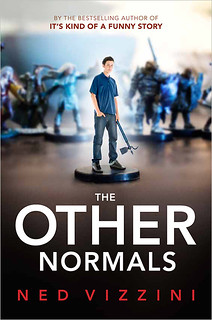
Why I Wrote THE OTHER NORMALS -- Wait a Minute, Why Do I Write Anything?!

Occasionally a writing prompt stops you in your tracks. Example: Write about why you wrote your new book The Other Normals:

The Other Normals -- Cover


That seems like a small part of some bigger questions. Such as:

  • Why do I ever write ANYTHING?
  • Why does ANYONE ever write anything?
  • Are there some books that are written for better reasons than others?

It doesn't help that one of the greatest essays about writing is George Orwell's "Why I Write" from 1946. So if I were to do a guest blog called "Why I Write," I would be plagiarizing him. I guess I could call the entry "Why I Don't Not Write," but Orwell would call that political doublespeak. In any case, the answer is:

I'm a mimic.


I admit it. All artists are -- or at least, they start out that way. And I don't think working artists ever lose it.

Let's take the following as a definition for art:

Art is that which exists only for itself.

Make sense? After all, when you appreciate art, you're appreciating something outside of time and purpose. You don't need art. You don't need it to eat, drink, breathe. But once you see it, it tells you that there's more to life than those things.

Whenever I experienced this transformative, time-stopping power, even as a young boy, I wanted to imitate it. I wanted to make it myself. When I was nine, I played Super Mario Brothers a lot --


-- and that inspired to me to try and design a video game on graph paper.

Guess what? The game I designed was very similar to Super Mario Brothers. In fact, it was exactly the same, but the main character wasn't Mario, he was a warrior from the desert named "Hadron." The game was called Desert Jumper, and it never got made -- because I didn't know how to program a computer.

But then I discovered something in school, when we had a special class called "Writers' Workshop" for two weeks.

Writing was the art form I could imitate with the least amount of trouble.

Think about it: to write, you don't need to program a computer. All you need is paper and pen! So...

  • In 5th grade, I read Hitchhiker's Guide to the Galaxy and tried to write a humorous sci-fi book of my own. (It's long gone; the only thing I remember was an alien character named "V'leek Jaja".)
  • In 8th grade, I read all the Macworld magazines I could and started an AOL-only Mac newsletter called "AppleLine Monthly".
  • In 10th grade, I read New York Press and tried to write my own confessional essays like the alternative newspaper columnists of the time... and that stuck and I had a career!

So for me, writing is pure piracy and cannibalism. But one work that I never got to imitate, even after a decade in young-adult literature, was this one:


I loved Dungeons & Dragons as a kid, and I always wanted to write a book with a fantasy world in it. So with The Other Normals, I scratched another imitative itch and tried to put my own spin on it. That's all we can expect of one another, isn't it?

I suppose it would be more epic if I said I wrote the book to make the world a better place, or to free my imprisoned relative. But maybe you can take something away from my pedestrian motivations. If I can be a professional writer just by reading books and then trying to do them one better, I can't fault you for doing the same, dear reader, and I'm happy to see what you come up with.

Jepp, Who Defied the Stars blog tour


A warm welcome to Katherine Marsh, whose fantastical novel Jepp, Who Defied the Stars comes out very soon!

_________________________________________________________________

Greetings, Book Muncher and Friends!

I’m the author of the new YA novel Jepp, Who Defied the Stars. A few interesting tidbits about me: I don’t like elevators, I used to write for Rolling Stone magazine, and I was raised by astrology.

Huh? What’s that about? Funny you should ask since my astrological upbringing inspired me to write Jepp. Here’s my story:

In the 1960s, my mother went to an astrologer who told her she’d have one child late in life, a girl and a Scorpio. Years passed, my mom grew older, and it didn’t look like she was going to have kids. But then she finally met a guy and, at 41, became pregnant. But there was one problem. The baby was due on November 22, the sign of Sagittarius.

By this point, my mom really believed in astrology so when she got close to her due date, she used some natural remedies to kickstart her labor. I was born eleven days early on November 11, 1974, my mother’s only child, a girl and a Scorpio.

As I was growing up, my mom continued to consult her ephemeris (a book showing the daily positions of the planets) and make decisions based on it. We cut our hair by astrology. She even selected the day I would take my SATs based on the stars! Because of this, I grew up with some conflicted feelings about fate and free will: Was my life written in the stars? Or, as the rational part of me claimed, was all this just baloney? How much are we the creations of our parents and our circumstances? How much is our destiny really our own?

You’d think I’d have this all figured out by the time I was in my mid-30s but, if you’re a young person now, you may be surprised to find out how much of the same drama you’re still working out later. As an adult, I was basically a “lapsed astrologist” but I found myself checking the stars when I had to do something scary—like flying or giving birth (I have two kids). And so I decided to write a novel that would give me the chance to explore these big questions of fate and free will.

Every good book is born of a passion and so I began to immerse myself in astrology and became fascinated by the time when many astronomers were also astrologers. One particular figure stood out: a 16th century Danish astronomer/ astrologer named Tycho Brahe. Brahe had a prosthetic nose, a collection of walking statues, a futuristic castle with running water, and a dwarf, Jepp, who sat at his feet.

It was this Jepp, a footnote of history, who became my story and my vehicle for all these questions about fate and free will. Who was he and how did he end up with Tycho? What happened to him there? The result was an adventure/ romance/ coming-of-age story populated by characters both real and imagined and staring the year’s most unusual literary cast: a teenage dwarf hero, a giant, a Spanish princess, an eccentric astronomer, and a beer-drinking moose, to name just a few.

At the end of the novel, Jepp comes to some conclusions about how much of our lives are determined by fate and how much of them we can control through our own actions. In writing the book, I did as well. But I won’t reveal my current stance on astrology. You’ll have to read Jepp, Who Defied Stars to find out.

For more, check out katherinemarsh.com or follow me on twitter @MarshKatherine or on facebook.com/katherinemarshauthor

_________________________________________________________________

And now for a contest!

CONTEST CLOSED

(1) lucky winner will receive Jepp, Who Defied the Stars by Katherine Marsh
courtesy of AuthorsOnTheWeb


Other details:
  • US/Canadian mailing addresses only.
  • Contest ends 10/10/12, at 9 p.m. EST.
Remember, you must complete the form to be entered, and only one form submission per person will be counted. If you have any questions about this contest, see my contest policy, or contact me and ask away.

Promised blog tour

check out the full tour schedule at the MacKids blog

I have been a huge fan of the Birthmarked trilogy by Caragh M. O'Brien from the very beginning, so it's no wonder that I was thrilled when I was asked to be part of the blog tour for Prized, the final book in this great trilogy. For the inaugural stop on the tour, I asked Caragh to reflect on how things have changed for her over the course of writing and the publication of all three Birthmarked books. Here's what she had to say. 

_________________________________________________________________

First, Rachael, let me thank you for inviting me to kick off my blog tour for Promised with you! It's great that you gave me such a sweeping, open topic, and I'm glad I've had a chance to ponder my reply.

Over the span of writing the Birthmarked series, I’ve learned so much about writing and the publishing process. It’s a bit mind boggling to think of how much my expectations have changed, and how my perspective beyond my writing has changed, too.

One thing I didn’t see coming is the way my relationship with Gaia, the main character of the series, has made me braver. When I started writing Birthmarked, I wrote because I wanted to, for the fun of it, with no real expectation of getting the novel published. While I was adventurous at heart and lived deeply, relishing each day, I wasn’t looking for change. I was a lot like Gaia, actually: accepting and curious. I was responsible and worked hard, but I didn’t see myself as a leader or spend much time questioning my role in society.

Then Birthmarked sold, with two more books thrown in, and all the sudden I was facing a creative challenge bigger than anything I’d encountered before. Within a year, I was forced to decide if I could give up my teaching, which I loved, to write full-time. The choice had huge financial, emotional, and professional consequences, and I was scared. After I weighed all the pros and cons, I had a sort of epiphany: I was writing about someone I admired, someone brave, so why shouldn’t I try to be like Gaia? She would seize a chance full of new possibilities. She wouldn’t let fear hold her back.

So I resigned from teaching to write, and began a second life. I have become much, much braver than I used to be, and this has helped me explore Gaia’s changes, too, though her challenges have been far more dire. Could I have written torture scenes four years ago? Or love squares? Could I have written about abortion or surrogacy?

No.

My expectations on the publishing front are different now, too. I’ve had four years of work closely with my editor and the team at Roaring Brook. I know a ton more about the nitty-gritty of that whole process, with its quirky pace and juggling, and I’ve watched the marketing support increase for each book, too. I still can hardly believe I’m going on the Fierce Reads tour this fall. I didn’t see that coming.

Here’s sort of a funny thing. At first, my editor Nancy Mercado was so careful of me, so encouraging and gentle with her questions and feedback. I thought, can she really be this nice? It turned out she really is that nice. She’s been unfailingly supportive this entire time, but I think it’s also fair to say we’ve come up with some short-hand ways of dealing with each other. She doesn’t gush quite so much about the strengths of my work now, but rather gets quickly into the tangles. We trust each other with the editing/revising process more. It used to be I’d secretly keep revising a draft while I waited for her feedback, trying to nudge it along on my own. Now I just park a manuscript once I send it to her because I know when she gets back to me, she’s going to razor in on exactly what most needs exploring. She never, ever settles for good enough, and I’m grateful for that.

The last really important, unexpected thing for me has been the way Gaia’s story has brought me closer to people. I’ve really been stunned by the number of readers who have written to me about Gaia and Leon, and by others I’ve met in book groups. Though our exchanges are relatively brief, they are heartfelt and genuine in a way I never could have predicted, and I feel like I’m part of a community of caring people. The novels have also deepened my relationships with friends and family who were already in my life before publication. Prized, especially, has prompted difficult conversations about women’s issues that we had avoided before, and this searching toward understanding each other is incredibly valuable to me.

This is probably more of an answer than you were looking for, Rachael, so I won’t go any further. But it’s an engaging prompt, this question of what changes for a writer over the span of a series. My own changes have focused around writing Gaia’s story, but I can’t help wondering, if you thought back over the last four years of your own life, if you’d find a similar pattern to follow, threads that hold it all together for you. Chances are, we’re all growing braver.

At least, I hope so.

_________________________________________________________________

And now, it's the moment you've all been waiting for: your chance to win all 3 books in the Birthmarked trilogy!

CONTEST CLOSED

(1) lucky winner will receive Birthmarked, Prized, and Promised by Caragh M. O'Brien
courtesy of Macmillan

To enter this contest, please fill out this form:
https://docs.google.com/spreadsheet/viewform?formkey=dDdtTllyanNLTVpPR2gxN2NNSlg5ZWc6MQ

Other details:
  • US/Canadian mailing addresses only.
  • Contest ends 10/07/12, at 9 p.m. PST.
Remember, you must complete the form to be entered, and only one form submission per person will be counted. If you have any questions about this contest, see my contest policy, or contact me and ask away.

_________________________________________________________________

And finally, before you go, don't forget:

Caragh's website: http://www.caraghobrien.com/
Caragh on twitter: @CaraghMOBrien. 
Tortured, a bridge story between Birthmarked & Prized: 
     http://us.macmillan.com/tortured/CaraghOBrien
Ruled, a bridge story between Prized & Promised: 
     http://us.macmillan.com/ruled/CaraghOBrien